
Piles Treatment in Kolkata
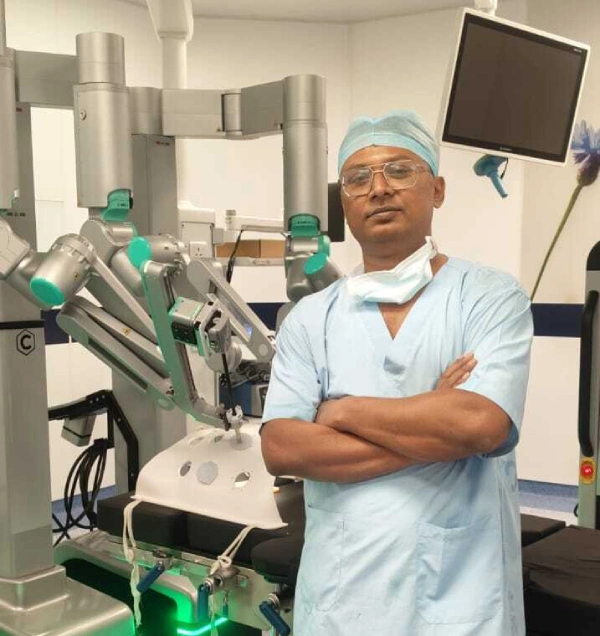
Dr Mainak Pal provides piles treatment in Kolkata based on the condition's type, grade, and severity. Care includes lifestyle measures, medicines, office-based procedures, laser treatment, MIPH or conventional surgery.
Home / Treatments / Piles, Fissure & Fistula / Piles Treatment
Key Insights:
Worldwide, one in four people have haemorrhoidal disease.
India alone registers 1 million new cases of piles annually
Male-to-female patient ratio in India is 2.2:1
What Are Piles or Haemorrhoids?
Piles, medically called haemorrhoids, develop when the supporting tissues and blood vessels inside or around the anus become enlarged or displaced. Internal piles form inside the rectum, while external piles develop beneath the surrounding skin.
Piles Treatment at a Glance
| Treatment Detail | What to Expect |
|---|---|
| Procedure | Non-surgical, office-based or surgical treatment |
| Main purpose | Management of bleeding, prolapse, irritation and recurring symptoms |
| Treatment options | Medicines, banding, sclerotherapy, laser coagulation, MIPH or haemorrhoidectomy |
| Anaesthesia | None, local, regional or general, depending on the procedure |
| Hospital stay | Outpatient or same-day care for many procedures; short stay when required |
| Recovery | Based on the treatment method, grade and individual progress |
| Suitability | Symptoms, type, grade, external components and previous treatment |
| Treated by | Dr Mainak Pal |
What Are the Types and Grades of Piles?
- External piles: Lumps beneath the skin around the anus
- Grade I: Internal piles without prolapse
- Grade II: Prolapse during bowel movements but returns naturally
- Grade III: Prolapse requiring manual repositioning
- Grade IV: Permanently prolapsed and not easily repositioned
What Are the Common Symptoms of Piles?
Symptoms may include:
- Bright-red bleeding during or after passing stool
- Itching or irritation around the anus
- A lump near the anal opening
- Mucus discharge
- Difficulty maintaining hygiene
- Prolapse during bowel movements
- Discomfort while sitting
- Tenderness from a clotted external pile
Note: Rectal bleeding should not automatically be assumed to be piles because other bowel conditions can produce similar symptoms.
What Causes Piles and Who Is at Risk?
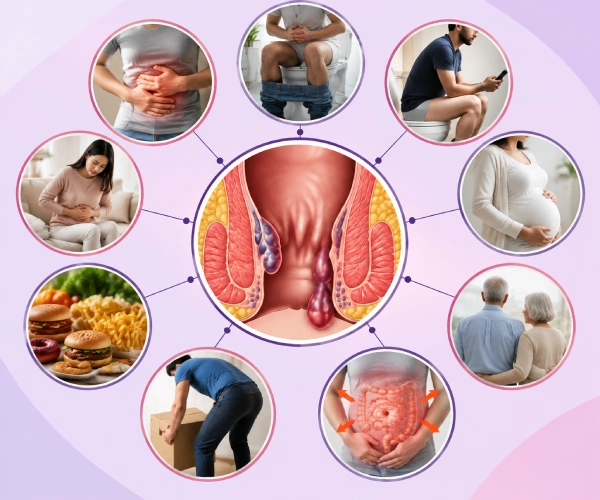
Associated factors include:
- Constipation and repeated straining
- Chronic diarrhoea
- Prolonged toilet sitting
- Low-fibre eating habits
- Pregnancy
- Regular heavy lifting
- Age-related tissue changes
- Increased abdominal pressure
- Previous episodes or family history
How Are Piles Diagnosed?
Diagnosis begins with a review of symptoms, bowel habits, diet, medicines and medical history. Examination may include inspection, a digital rectal examination and anoscopy or proctoscopy.
Further bowel evaluation may be advised when bleeding is unexplained, symptoms are unusual or another colorectal condition needs to be excluded.
Which Piles Treatments Are Available?
| Treatment | When It May Be Considered |
|---|---|
| Lifestyle and medical care | Early-stage or mild symptoms associated with constipation or straining |
| Rubber band ligation | Selected bleeding or prolapsing internal piles |
| Sclerotherapy | Selected internal piles requiring an office-based procedure |
| Laser coagulation | Suitable internal piles based on their grade and clinical findings |
| MIPH or stapled haemorrhoidopexy | Selected prolapsing or bleeding internal piles |
| Haemorrhoidectomy | Large external, combined or advanced prolapsing piles |
What Benefits May Piles Treatment Offer?
Treatment may support:
- Control of recurring symptoms
- Reduction in bleeding
- Management of prolapse
- Easier bowel movements
- Improved sitting comfort
- Better local hygiene
- Reduced disruption to daily activities
Why Choose Dr Mainak Pal for Piles Treatment?
Dr Mainak Pal’s academic and professional background includes:
- MS in General Surgery
- Fellowship in Minimal Access Surgery—FMAS
- MIPH and laser proctology training at IMMAST, Mumbai
- Consultant experience at Peerless Hospital
- Teaching and research guidance for DNB trainees
Individualised Treatment Planning
Treatment begins by confirming the type and grade of piles and ruling out other possible causes. If symptoms recur, consult Dr Pal to determine the appropriate treatment, recovery and follow-up plan.
What Happens During Piles Treatment?
Before Treatment
- Symptom and medical history review
- Examination and grading
- Review of current medicines
- Bowel preparation when required
- Treatment and anaesthesia planning
During Treatment
- Office-based or hospital procedure
- Appropriate anaesthesia where required
- Banding, sclerotherapy, laser coagulation, stapling or surgical removal
- Technique based on clinical findings
After Treatment
- Short-period monitoring
- Prescribed medicines
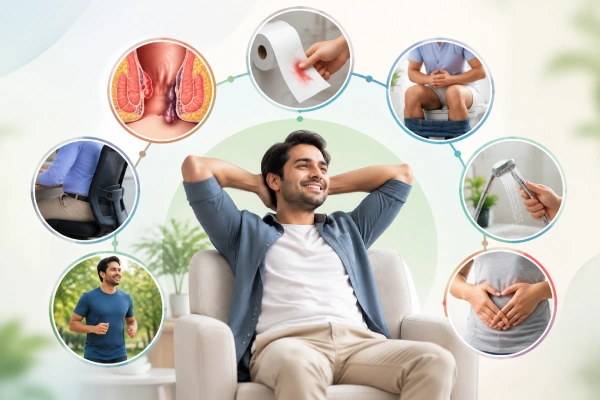
- Fibre and hydration guidance
- Stool-softening support
- Local hygiene advice
- Follow-up planning
What Is the Recovery Timeline?
| Stage | What You May Expect |
|---|---|
| Treatment day | Monitoring and same-day discharge after many procedures. |
| First few days | Medicines, hydration, fibre and gentle activity. |
| First 1–2 weeks | Gradual improvement and review when advised. |
| Following weeks | Return to routine based on the procedure and recovery. |
| Long term | Healthy bowel habits and follow-up for recurring symptoms. |
What Care Is Needed After Piles Treatment?
Aftercare may include:
- Prescribed medicines
- Fibre-rich meals
- Adequate hydration
- Stool softeners when advised
- Avoidance of straining
- Limited toilet sitting
- Gentle daily activity
- Local hygiene
- Scheduled follow-up
What Can Happen If Piles Are Left Untreated?
Mild piles may improve with suitable self-care. Persistent or advanced piles may lead to:
- Repeated bleeding
- Iron-deficiency anaemia in uncommon prolonged cases
- Increasing prolapse
- Clotting within an external pile
- Persistent itching or irritation
- Difficulty maintaining hygiene
- Greater disruption to daily activities
What Determines the Cost of Piles Treatment?
The cost may depend on:
- Type and grade of piles
- Diagnostic tests
- Selected treatment technique
- Anaesthesia requirements
- Hospital or day-care charges
- Medicines and consumables
- Length of stay
- Insurance coverage
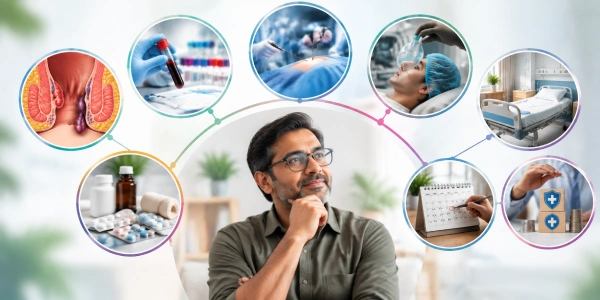
What People Also Ask
Can piles improve without surgery?
Yes. Mild piles may improve with fibre, fluids, better toilet habits and prescribed medicines. Persistent or prolapsing piles may require a procedure.
How to identify whether bleeding is from piles?
Bleeding alone cannot confirm piles. An examination may be needed to rule out fissures, polyps, or other bowel conditions.
Is laser piles treatment suitable for everyone?
No. Suitability depends on the type, grade, prolapse, external components and previous treatment.
Can piles return after treatment?
Piles may recur, particularly when constipation, straining or prolonged toilet sitting continues. Healthy bowel habits may reduce the risk.
When should piles symptoms receive urgent assessment?
Seek prompt care for heavy bleeding, dizziness, fainting, fever, severe discomfort or bleeding accompanied by abdominal symptoms.
Plan Your Piles Treatment Consultation in Kolkata
Consult Dr Mainak Pal for persistent bleeding, prolapse, itching, anal lumps or symptoms that do not improve with home care.
A Few Kind Words
Treatment Experiences
Here’s what the patients have to say after surgery.