
Laparoscopic Sleeve Gastrectomy in Kolkata
Dr Mainak Pal specialises in laparoscopic sleeve gastrectomy tailored to your physical and clinical profile—delivering lasting, minimally invasive weight management without intestinal rerouting.
Home / Treatments / Bariatric & Weight Loss / Laparoscopic Sleeve Gastrectomy
Key Facts:
28.6% of Indian adults live with generalised obesity
Nearly 4 in 10 Indian adults live with abdominal obesity.
Among Indian adults aged 20+, 39.5% have abdominal obesity.
What is Laparoscopic Sleeve Gastrectomy?
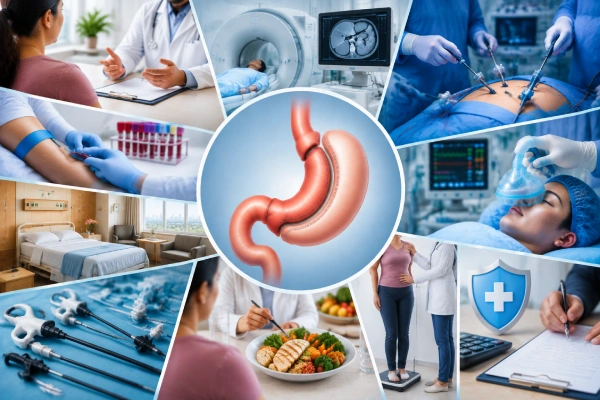
Laparoscopic sleeve gastrectomy is a metabolic and bariatric operation in which most of the stomach is removed vertically, leaving a narrow, sleeve-shaped stomach. A smaller stomach helps you eat smaller portions and feel satisfied sooner. Changes in appetite and metabolic signals may also support weight loss and better control of some obesity-related conditions.
Unlike gastric bypass, sleeve gastrectomy does not reroute the small intestine. It is not a cosmetic shortcut or a stand-alone cure—lasting benefits depend on nutrition, activity, prescribed supplements, medical monitoring and regular follow-up.
Sleeve Gastrectomy at a Glance
| Parameter | Details |
|---|---|
| Procedure | Laparoscopic metabolic and bariatric surgery |
| What changes | Most of the stomach is removed, leaving a narrow sleeve |
| Intestinal rerouting | No |
| Anaesthesia | General anaesthesia |
| Permanence | The removed stomach cannot be restored |
| Potential role | Supports substantial weight loss and metabolic improvement; results vary |
| Key consideration | May cause or worsen reflux |
| Follow-up | Long-term nutritional and clinical monitoring |
| Treated by | Dr Mainak Pal |
What are the Potential Benefits?
For appropriately selected patients, sleeve gastrectomy may help:
- Support meaningful and sustained weight loss
- Improve blood-sugar control and other metabolic markers
- Reduce the impact of high blood pressure, sleep apnoea or fatty liver
- Make movement and everyday activity easier
- Support improved energy, sleep and quality of life
- Reduce the need for some medicines after medical review

Who May Consider Sleeve Gastrectomy?
BMI is an important starting point, but it is not the only criterion. Current Indian guidance uses Asian-specific thresholds: surgery may be considered from a BMI of 27.5 kg/m² in selected adults with serious obesity-related conditions, with broader recommendations at higher BMI levels.
A bariatric assessment may be appropriate if you:
- Live with type 2 diabetes, high blood pressure, sleep apnoea, fatty liver or mobility concerns
- Have not achieved lasting results with structured lifestyle or medical treatment
- Understand that the operation is permanent
- Can follow a staged diet, supplements, blood tests and long-term reviews
- Do not have a condition that makes another treatment more suitable
When May Another Procedure Be More Suitable?
Sleeve gastrectomy is not automatically the best operation for every patient. Significant reflux, oesophagitis, Barrett’s oesophagus, specific metabolic priorities, previous surgery or anatomical factors may favour gastric bypass or another treatment.
Procedure selection follows appropriate investigations and a balanced discussion of the benefits, limitations and long-term responsibilities.
Why Consult Dr Mainak Pal for Sleeve Gastrectomy?
- Personalised evaluation of weight history, metabolic health, reflux and treatment goals
- Clear comparison of sleeve gastrectomy, gastric bypass and non-surgical options
- Minimally invasive planning supported by long-term nutrition and follow-up
- FMAS qualification and bariatric surgery training at AIIMS New Delhi and IRCAD France
Consider a Consultation
A consultation helps determine whether surgery is appropriate and which procedure best fits your health—not simply a number on the scale.
What Happens During Sleeve Gastrectomy Treatment?
Before the Procedure
- Review of BMI, waist measurement, weight history and previous treatment
- Assessment of diabetes, blood pressure, sleep apnoea, liver health and reflux
- Blood tests, nutrition review and other investigations as clinically required
- Anaesthetic assessment and a personalised preparation plan
During the Procedure
- General anaesthesia is administered
- Small incisions provide access for a camera and specialised instruments
- The stomach is divided vertically, and the larger outer portion is removed
- The remaining stomach forms a sleeve while the intestine stays in its usual pathway
After the Procedure
- Monitoring, symptom control, hydration and gentle walking
- A staged diet that progresses according to recovery
- Prescribed medicines, vitamins and mineral supplements
- Planned clinical, nutritional and blood-test follow-up
What Is the Recovery Timeline?
| Stage | What You May Expect |
|---|---|
| Hospital phase | Monitoring, fluids, symptom control and early mobility |
| Early home phase | Hydration, wound care, prescribed diet stages and gentle activity |
| Return to routine | Progress depends on recovery and the physical demands of work |
| Long term | Structured eating, activity, supplements, blood tests and clinical review |
Which Lifestyle Changes Are Needed?
- Eat smaller portions slowly and stop when comfortably satisfied
- Prioritise protein and nutrient-rich foods as advised
- Drink enough fluid between meals and follow the staged diet
- Take prescribed vitamins and minerals consistently
- Increase physical activity gradually after medical clearance
- Attend follow-up visits and complete recommended blood tests

What Can Happen If Obesity is Left Untreated?
Without effective management, obesity may gradually increase the risk or severity of several health conditions, including:
- Type 2 diabetes and metabolic syndrome
- High blood pressure, heart disease and stroke
- Fatty liver and gallbladder conditions
- Sleep apnoea and breathing difficulties
- Joint strain, pain and reduced mobility
- Fertility and pregnancy-related concerns
- Reduced energy, emotional well-being and quality of life
What Determines the Cost in Kolkata?
The cost of sleeve gastrectomy in Kolkata may vary according to:
- Hospital and room category
- Pre-operative investigations
- Anaesthesia
- Surgical equipment and consumables
- Medical complexity
- Length of hospital stay
- Follow-up and nutritional support
- Insurance or cashless approval, where applicable
What People Also Ask
Is sleeve gastrectomy reversible?
No. The removed portion of the stomach cannot be restored. A later conversion to another bariatric procedure is not the same as reversing the operation.
How much weight can be lost?
Weight loss varies according to the patient, timeframe and measurement used. Long-term studies show substantial average weight loss, but an individual result cannot be promised.
Can sleeve gastrectomy improve diabetes?
It may improve blood-sugar control and can lead to remission in selected patients. Diabetes may persist or return, so continued monitoring and medical guidance remain important.
Will vitamins be needed?
Yes. A prescribed supplement and blood-test plan is generally required long term, even though the intestine is not bypassed.
Can weight return after surgery?
Some weight regain can occur because obesity is a relapsing condition. Early assessment can identify nutritional, behavioural, medical or anatomical factors and guide further care.
Which symptoms need urgent attention after surgery?
Seek prompt medical advice for breathlessness, chest pain, a racing pulse, fever, worsening abdominal pain, persistent vomiting, inability to drink, bleeding or increasing wound problems.
Plan Your Sleeve Gastrectomy Consultation in Kolkata
A detailed consultation can help you understand your BMI, metabolic risks, reflux profile and available treatment options. After assessment, you will receive guidance on whether sleeve gastrectomy, another bariatric procedure or non-surgical treatment may be more appropriate.
A Few Kind Words
Treatment Experiences
Here’s what the patients have to say after surgery.