
Laparoscopic Hernia Surgery in Kolkata
Dr Mainak Pal provides laparoscopic treatment for selected inguinal, femoral, umbilical, ventral and incisional hernias, including complex cases. The surgical approach is planned according to the hernia type, symptoms, complexity and previous abdominal surgery.
Home / Treatments / Laparoscopic GI Surgery / Laparoscopic Hernia Surgery
Notable Facts:
32.53 million: Estimated prevalent cases worldwide
2.45 million: Estimated new cases in India
86%: Share of new cases occurring in males worldwide
What is Laparoscopic Hernia Surgery?
A hernia develops when tissue or an internal organ pushes through a weakened area in the surrounding muscle or abdominal wall. It may appear as a swelling in the groin or abdomen and can become more noticeable while standing, coughing or lifting.
During laparoscopic hernia surgery, a camera and specialised instruments are inserted through small abdominal incisions. The surgeon repositions the displaced tissue and usually reinforces the weakened area with surgical mesh.
Treatment at a Glance
| Treatment Detail | What to Expect |
|---|---|
| Surgical approach | Minimally invasive or open, depending on suitability |
| Common laparoscopic techniques | TEP and TAPP |
| Anaesthesia | Usually general anaesthesia |
| Reinforcement | Mesh is commonly used |
| Hospital stay | Same-day or short hospital stay in suitable cases |
| Recovery | Varies with the procedure, occupation and overall health |
| Treated by | Dr Mainak Pal |
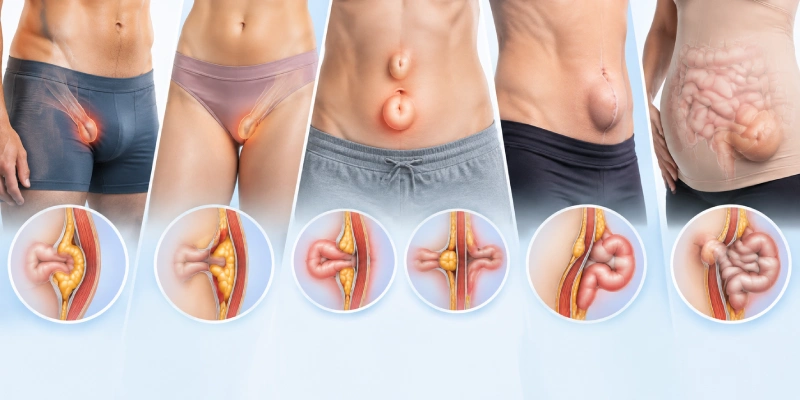
Which Types of Hernias Can Be Treated?
Inguinal Hernia
An inguinal hernia develops in the groin and is more common in men. It may cause a visible swelling, heaviness or a pulling sensation that becomes more noticeable during physical activity.
Femoral Hernia
A femoral hernia appears near the upper thigh or groin. Although less common, it requires careful assessment because the risk of complications can be higher.
Umbilical and Epigastric Hernias
Umbilical hernias occur around the navel, while epigastric hernias develop between the navel and lower chest. Surgery may be considered when the hernia enlarges or causes symptoms.
Ventral and Incisional Hernias
A ventral hernia occurs through the abdominal wall. An incisional hernia develops at or near the site of a previous abdominal operation and may require more detailed reconstruction.
Complex Abdominal-Wall Hernias
Large, recurrent or complicated abdominal-wall hernias may require advanced planning. The appropriate technique depends on the location, size, muscle condition and history of previous repairs.
Which Laparoscopic Techniques Are Used?
TEP and TAPP Hernia Repair
| TEP Repair | TAPP Repair |
|---|---|
| The repair is completed without entering the abdominal cavity. | The abdominal cavity is entered to reach and repair the weakened area. |
| Commonly considered for selected groin hernias. | May be considered based on anatomy, complexity and previous procedures. |
Note: For selected complex abdominal-wall hernias, techniques or supporting measures may include eTEP, TAR, SCOLA, progressive preoperative pneumoperitoneum or botulinum toxin-assisted preparation. These approaches are not required for every patient.
When Should Hernia Surgery Be Considered?
Assessment may be advised if you experience:
- A swelling in the groin, navel or abdomen
- Heaviness, aching or a pulling sensation
- Symptoms that increase while coughing, standing or lifting
- Difficulty performing routine activities
- Enlargement of an existing hernia
- A hernia developing near a previous surgical scar
- Sudden symptoms associated with vomiting or abdominal distension
What Are the Potential Benefits of Laparoscopic Repair?
For appropriately selected patients, laparoscopic hernia repair may offer:
- Smaller abdominal incisions
- Less postoperative wound discomfort
- Reduced blood loss
- A shorter hospital stay
- Earlier return to routine activity
- Treatment of hernias affecting both groins during one procedure
- Better visibility of the affected area during repair
Why Choose Dr Mainak Pal for Hernia Surgery?
Dr Pal’s professional background combines general surgery, minimal-access training and hospital-based surgical practice.
- MS in General Surgery
- Fellowship in Minimal Access Surgery—FMAS
- Advanced laparoscopic knotting and suturing training at ETHICON, New Delhi
- More than 15 years of surgical experience
- Experience with different laparoscopic techniques for selected hernias
- Treatment planning based on the condition and complexity of the hernia
Have You Noticed a Swelling in Your Abdomen or Groin?
If you’re noticing these signs often, don’t delay; consider reaching out to Dr Pal for a consultation to decide on a treatment plan.
How Is Treatment Planned?
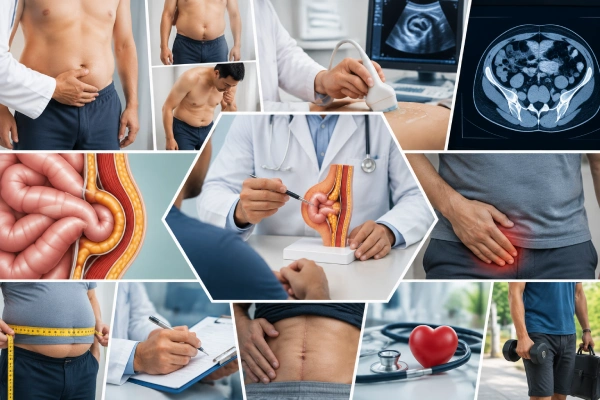
Treatment begins with a clinical assessment. The doctor may examine the swelling while you are standing, coughing or gently straining.
An ultrasound, CT scan or another investigation may be recommended when the hernia is difficult to assess, has returned after an earlier repair or appears complex.
Planning may consider:
- Type, size and location of the hernia
- Severity and duration of symptoms
- Previous abdominal operations
- Existing medical conditions
- Body weight and abdominal-wall strength
- Nature of work and daily physical activity
- Suitability for anaesthesia and surgery
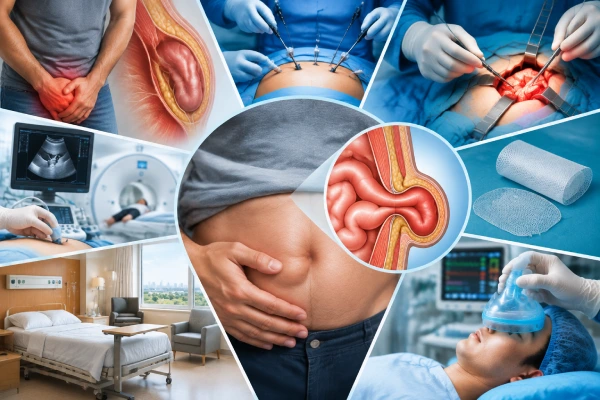
What Happens During Laparoscopic Hernia Treatment?
Before Surgery
- Hernia type, size and location assessment
- Symptom and medical history review
- Blood tests and imaging, if required
- Existing health-condition evaluation
- Medication and allergy review
- Anaesthesia assessment and fasting guidance
During Surgery
- General anaesthesia
- Small abdominal incisions
- Camera-guided view of the hernia
- Repositioning of displaced tissue
- Repair of the weakened area
- Mesh reinforcement when appropriate
- Closure of the incisions
After Surgery
- Recovery and vital-sign monitoring
- Early, gentle walking
- Gradual introduction of fluids and light food
- Same-day or next-day discharge when suitable
- Wound care and activity guidance
What Can You Expect During Recovery?
| Stage | What You May Expect |
|---|---|
| Hospital phase | Monitoring, fluids, symptom control and gentle walking. Discharge may be possible the same or following day. |
| Early home phase | Wound care, prescribed medicines, light meals and gentle daily activity. |
| Return to routine | Light work may resume depending on recovery, comfort and the physical demands of your job. |
| Long-term | Exercise and heavier work may gradually restart after medical clearance. Complex repairs may require longer recovery. |
What Can Happen If a Hernia Is Left Untreated?
A hernia generally does not heal naturally and may gradually increase in size. Leaving a symptomatic hernia untreated can lead to:
- Increasing heaviness or aching
- Difficulty with physical activity
- Enlargement of the swelling
- Trapping of tissue within the hernia
- Intestinal obstruction
- Reduced blood supply to trapped tissue
- Need for emergency treatment
What Determines the Cost of Hernia Surgery?
The cost of hernia surgery in Kolkata can vary according to:
- Type and complexity of the hernia
- Open or laparoscopic approach
- Surgical technique and mesh required
- Investigations and anaesthesia
- Hospital category and length of stay
- Need for additional abdominal-wall reconstruction
What People Also Ask
Can a hernia heal without surgery?
No. Lifestyle changes may reduce strain or symptoms, but they cannot close the muscle defect. Surgery is the definitive way to repair a hernia.
Is laparoscopic surgery suitable for every hernia?
No. Suitability depends on the hernia type, size, complexity, previous repairs and overall health. Open repair may be more appropriate in some cases.
Is mesh always required during hernia surgery?
Mesh is commonly used to strengthen the repair and reduce recurrence risk, but the decision depends on the hernia, operative conditions and individual requirements.
Can a hernia return after treatment?
Recurrence is possible after any type of repair. Hernia complexity, tissue quality, smoking, obesity, wound concerns and postoperative strain may influence the risk.
Can coughing or constipation affect a hernia?
Persistent coughing and repeated straining can increase abdominal pressure and make a hernia more noticeable. Treating these concerns may form part of preparation and recovery.
Consult for Hernia Surgery in Kolkata
Get your hernia assessed to understand its type, severity and suitable treatment options.
A Few Kind Words
Treatment Experiences
Here’s what the patients have to say after surgery.