
MIPH Haemorrhoid Treatment in Kolkata
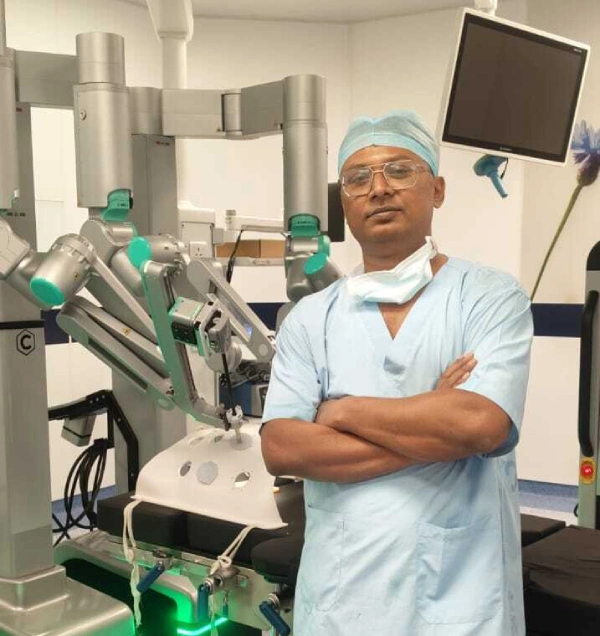
Dr Mainak Pal assesses haemorrhoids, commonly known as piles, by type, grade, and prolapse extent. For selected prolapsing internal haemorrhoids, MIPH—also called stapled haemorrhoidopexy or the stapler procedure—may be considered.
Home / Treatments / Piles, Fissure & Fistula / Haemorrhoid Treatment
Key Insights:
Globally, 4.4-38% of people experience internal piles.
Generally, people aged 45-65 years are affected.
It affects both men and women equally.
What Is MIPH for Haemorrhoids?
MIPH commonly refers to stapled haemorrhoidopexy. A circular stapler lifts prolapsing internal haemorrhoidal tissue and reduces its blood supply. It is applied above the sensitive anal margin and avoids an external wound when performed alone.
MIPH Treatment at a Glance
| Treatment Detail | What to Expect |
|---|---|
| Procedure | MIPH or stapled haemorrhoidopexy |
| Main purpose | Lift prolapsing internal haemorrhoids |
| Common suitability | Selected Grade III or IV internal disease |
| Technique | Circular stapler placed inside the anal canal |
| External piles | Not directly treated by MIPH |
| Anaesthesia | Usually spinal or general |
| Hospital stay | Day care or short stay, depending on assessment |
| Recovery | Based on individual progress |
| Consultant | Dr Mainak Pal |
Which Haemorrhoid Grades May Be Suitable for MIPH?
- Grade I: No prolapse; MIPH is usually unnecessary
- Grade II: Prolapse returns naturally; simpler treatment may be considered
- Grade III: Manual repositioning is required; MIPH may be considered
- Grade IV: Permanently prolapsed; suitability needs careful assessment
- External haemorrhoids: Not directly treated by MIPH
Note: Bleeding, circumferential prolapse, external disease and previous care are also reviewed.
Which Symptoms May Lead to an MIPH Assessment?
- Internal tissue protruding during bowel movements
- Prolapse requiring manual repositioning
- Repeated bright-red bleeding
- Mucus discharge or dampness
- Irritation or difficulty maintaining hygiene
- Symptoms continuing despite non-surgical care
How Is Suitability for MIPH Assessed?
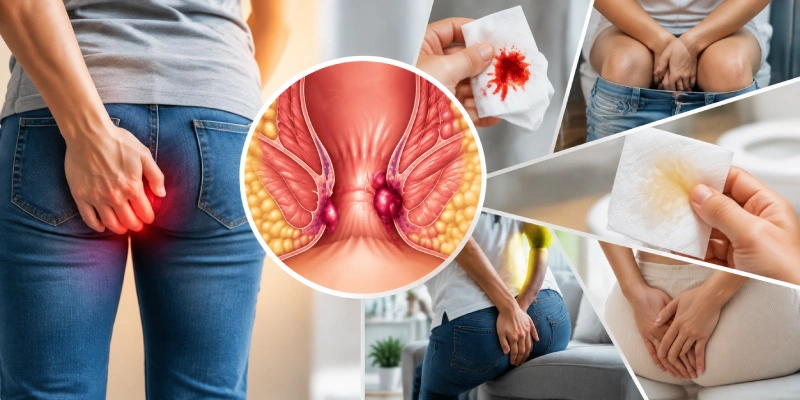
Assessment covers bleeding, prolapse, bowel habits and previous treatment. Inspection, digital rectal examination and anoscopy may define internal, external or combined disease. Unexplained bleeding or warning features may require colonoscopy.
How Does the Stapler Procedure Work?
A circular stapler removes a ring of prolapsed lining and joins the remaining tissue, pulling internal haemorrhoids upwards and reducing their blood supply. MIPH repositions tissue rather than removing each haemorrhoid.
What Are the Potential Benefits of MIPH?
- No external wound when performed alone
- Treats circumferential internal prolapse
- Less early postoperative discomfort in some studies
- Shorter initial recovery in suitable patients
- Day-care or short-stay treatment may be possible

What Are the Limitations and Risks of MIPH?
MIPH does not treat isolated external haemorrhoids or a substantial external component. Compared with excisional surgery, it may carry a greater chance of recurrent symptoms or prolapse.
Risks include bleeding, urinary retention, urgency, narrowing and uncommon serious complications. ASCRS guidance does not recommend it as a routine first-line operation, so alternatives and longer-term outcomes need discussion.
Why Choose Dr Mainak Pal for MIPH Treatment?
Dr Mainak Pal’s documented academic and professional background includes:
- MS in General Surgery
- Fellowship in Minimal Access Surgery—FMAS
- MIPH and laser proctology training at IMMAST, Mumbai, in 2023
- Consultant experience at Peerless Hospital, Kolkata
- Coloproctology conference participation
- DNB teaching and thesis guidance
Treatment Planning Based on Prolapse Pattern
The grade, internal prolapse, external component, bleeding and previous care are reviewed before deciding whether MIPH is appropriate.
What Happens During MIPH Treatment?
Before the Procedure
- Clinical and anaesthetic assessment
- Review of medicines and bleeding risk
- Preparation and fasting instructions
During the Procedure
- Spinal or general anaesthesia
- Stapler positioned above the haemorrhoids
- Prolapsed tissue lifted and fixed
- Staple line checked for bleeding
After the Procedure
- Monitoring and prescribed medicines
- Urination and bleeding checks
- Gradual return to fluids and food
- Discharge and follow-up instructions
What Is the Recovery Timeline After MIPH?
| Stage | What You May Expect |
|---|---|
| First 24 hours | Monitoring, symptom control and early movement. |
| First week | Mild bleeding, urgency or discomfort may occur. |
| 1–2 weeks | Gradual return to work and routine activities. |
| Following weeks | Review of healing, bowel habits and symptom control. |
Note: Recovery varies; follow individual instructions.
What Care Is Needed After MIPH?
- Take prescribed medicines as advised
- Maintain adequate fluid and fibre intake
- Use stool-softening treatment when prescribed
- Avoid straining and prolonged toilet sitting
- Maintain local hygiene
- Resume activity gradually
- Attend the scheduled follow-up

What Can Happen If Haemorrhoids Are Left Untreated?
Mild haemorrhoids may improve with suitable self-care. Persistent or advanced haemorrhoids may lead to:
- Repeated bleeding
- Increasing prolapse
- Persistent irritation
- Difficulty maintaining hygiene
- Clotting within an external haemorrhoid
- Iron-deficiency anaemia in uncommon prolonged cases
- Greater disruption to daily activities
What Determines the Cost of MIPH in Kolkata?
Cost depends on:
- Investigations
- Anaesthesia
- The stapling device
- Hospital stay
- Medicines, follow-up and insurance.

What People Also Ask
Is MIPH the same as stapler surgery?
Yes. MIPH commonly refers to stapled haemorrhoidopexy.
Does MIPH remove external haemorrhoids?
No. It treats prolapsing internal tissue and does not directly remove isolated external haemorrhoids.
Is MIPH suitable for Grade III haemorrhoids?
It may suit selected Grade III cases after assessing prolapse and external disease.
Can haemorrhoids return after MIPH?
Yes. Recurrence may be more frequent than after excisional surgery, making long-term outcomes important.
Does every patient with prolapse need MIPH?
No. Grade, symptoms, external disease and previous care guide treatment.
Consult for MIPH Haemorrhoid Treatment in Kolkata
Consult Dr Mainak Pal to determine whether MIPH, the stapler procedure or another treatment is suitable.
A Few Kind Words
Treatment Experiences
Here’s what the patients have to say after surgery.