
Anal Fistula Surgery in Kolkata
Dr Mainak Pal provides surgical treatment for anal fistulas based on the tract, location and sphincter involvement. Treatment options include fistulotomy, fistulectomy, LIFT and seton placement.
Home / Treatments / Piles, Fissure & Fistula / Anal Fistula Treatment
Key Insights:
12–28 people per 100,000 are affected by anal fistula yearly.
Men are affected 2–3 times more often than women.
Up to 40% of people with an anorectal abscess may have this issue.
What Is an Anal Fistula?
An anal fistula is an abnormal tunnel connecting an infected anal gland or the anal canal to an opening in the surrounding skin. It commonly develops when an anal abscess drains but the connecting tract remains.
Fistula Surgery at a Glance
| Treatment Detail | What to Expect |
|---|---|
| Condition treated | Simple, complex or recurring anal fistula |
| Main purpose | Treatment of the fistula while protecting sphincter function |
| Procedures offered | Fistulotomy, fistulectomy, LIFT or seton placement |
| Anaesthesia | Spinal or general anaesthesia |
| Hospital stay | Based on the procedure and individual condition |
| Recovery | Usually around 4–6 weeks; individual recovery may vary |
| Suitability | Internal and external openings, tract location and clinical findings |
| Treated by | Dr Mainak Pal |
What Are the Types of Anal Fistula?
- Simple or low fistula: Limited sphincter involvement
- Complex or high fistula: Greater muscle involvement or branching
- Recurrent fistula: Returns after previous treatment
- Disease-related fistula: Associated with an underlying bowel or medical condition
Note: The fistula type helps determine whether the tract should be opened, removed, closed or managed using a seton.
What Are the Common Symptoms?
Symptoms may include:
- Irritation or itching near the anal opening
- A pimple-like swelling
- Discharge that may soil clothing
- A visible opening near the anal region
- Redness around the affected area
- Discomfort while sitting or passing stool
- Repeated swelling followed by discharge

What Causes an Anal Fistula?
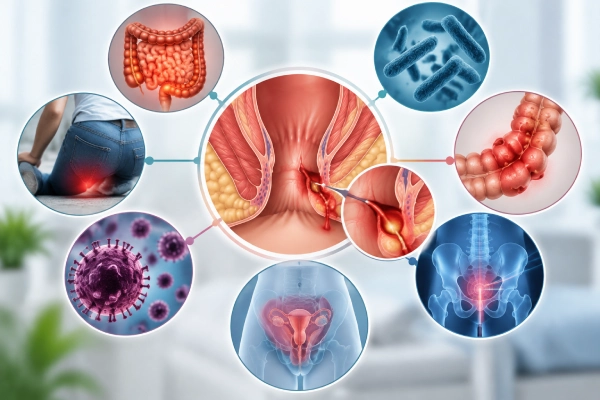
An anal fistula typically forms after an infected anal gland turns into an abscess. Once the abscess drains, a small, abnormal tunnel can remain between the anal canal and the skin. Factors associated with complex fistulas may include:
- Crohn’s disease
- Tuberculosis
- Diverticulitis
- Previous trauma
- Sexually transmitted infections
- Pelvic radiation
- Selected pelvic conditions
How Is an Anal Fistula Diagnosed?
Diagnosis may include an outpatient physical exam and an anoscope exam. The internal opening, external opening, and fistula tract are identified before the condition is classified by location and extent.
MRI, ultrasound or contrast-assisted imaging may be considered for complex, branching or recurring fistulas. Mapping the tract and its relationship with the sphincter muscles supports procedure selection.
Which Fistula Procedures Are Available?
Dr Mainak Pal’s fistula treatment options include:
| Procedure | When It May Be Considered |
|---|---|
| Fistulotomy | Selected low fistulas involving limited sphincter muscle |
| Fistulectomy | Suitable cases where removal of the tract is planned |
| LIFT | Fistulas requiring closure between the sphincter muscles |
| Seton placement | Complex fistulas requiring drainage or staged treatment |
What Benefits May Fistula Surgery Offer?
Treatment may support:
- Management of the underlying tract
- Control of recurring discharge
- Reduced risk of repeated abscess formation
- Improved local hygiene
- Reduced irritation and discomfort
- Protection of sphincter function during planning
- Improved comfort during daily activities

Why Choose Dr Mainak Pal for Fistula Surgery?
Dr Mainak Pal’s academic and professional background includes:
- MS in General Surgery
- Fellowship in Minimal Access Surgery—FMAS
- MIPH and laser proctology training at IMMAST, Mumbai
- Consultant experience at Peerless Hospital
- Teaching and research guidance for DNB trainees
- Participation in conferences focused on coloproctology
Treatment Planning Based on Fistula Anatomy
Treatment begins by locating the internal and external openings, identifying the tract and classifying the fistula according to its location and extent. These findings guide the selection of fistulotomy, fistulectomy, LIFT or seton placement.
What Happens During Fistula Treatment?
Before Surgery
- Symptom and medical-history review
- Physical examination and anoscopy
- Identification of internal and external openings
- Assessment of the fistula tract
- Imaging for selected complex cases
- Medicine and anaesthesia review
During Surgery
- Spinal or general anaesthesia
- Identification of the complete fistula tract
- Fistulotomy, fistulectomy, LIFT or seton placement
- Treatment based on fistula type and location
- Protection of the sphincter muscles where possible
After Surgery
- Post-procedure monitoring
- Prescribed medicines
- Dressing and hygiene guidance
- Fibre and hydration advice
- Gentle activity as recommended
- Follow-up and healing assessment
What Is the Recovery Timeline?
| Stage | What You May Expect |
|---|---|
| Treatment day | Monitoring and discharge planning. |
| First few days | Rest followed by a gradual return to normal activities. |
| First 1–2 weeks | Dressing care, medicines and activity guidance. |
| Around 4–6 weeks | Expected healing period for many patients. |
| Long term | Monitoring for recurring discharge or swelling. |
Note: Dr Pal advises patients when they can safely return to routine activities. Recovery varies with the procedure, fistula complexity and individual healing.
What Care Is Needed After Fistula Surgery?
Aftercare may include:
- Prescribed medicines
- Dressing or seton care
- Gentle local hygiene
- Fibre-rich meals
- Adequate hydration
- Avoidance of constipation and straining
- Gradual return to activity
- Scheduled follow-up

What Can Happen If a Fistula Is Left Untreated?
An anal fistula rarely heals permanently without suitable treatment. A persistent fistula may lead to:
- Recurring discharge
- Repeated swelling or abscess formation
- Ongoing irritation and soiling
- Development of additional branches
- Scarring around the tract
- Increasing fistula complexity
- Greater disruption to daily activities
What Determines the Cost of Fistula Surgery?
The cost may depend on:
- Simple or complex fistula
- Required imaging and investigations
- Selected surgical procedure
- Anaesthesia requirements
- Hospital or day-care charges
- Medicines and surgical consumables
- Length of stay
- Follow-up requirements
- Insurance coverage

What People Also Ask
Can an anal fistula heal without surgery?
Most anal fistulas require surgery because the abnormal tract usually remains even when discharge temporarily stops.
Are anal fissures and fistulas the same?
No. A fissure is a tear in the anal lining, while a fistula is an abnormal tunnel connecting the anal canal to the skin.
How is the appropriate fistula procedure selected?
Selection depends on the fistula type, location, tract and internal and external openings. Sphincter involvement and previous treatment may also influence the plan.
Can a fistula return after surgery?
Yes. Recurrence is possible, particularly with complex or branching fistulas and underlying bowel conditions.
When does a fistula need urgent assessment?
Seek prompt care for increasing swelling, fever, severe discomfort, spreading redness or difficulty passing urine or stool.
Plan Your Fistula Surgery Consultation in Kolkata
Consult Dr Mainak Pal for recurring discharge, irritation, pimple-like swelling or a visible opening near the anal region.
A Few Kind Words
Treatment Experiences
Here’s what the patients have to say after surgery.