

Key Takeaways
- Keeping stools soft and using prescribed ointments can support healing. Botox may help when ointments do not work.
- A fissure that remains unhealed despite proper treatment or repeatedly returns needs reassessment. Surgery may be considered after identifying why healing has stalled.
- The choice of surgery depends on muscle tightness, previous injury and existing bowel control. Healing benefits must be weighed against the risk of difficulty controlling gas or stool.
A fissure can make you dread every bowel movement. Most settle without an operation, but a tear that persists despite proper treatment may need anal fissure surgery. During anal fissure treatment, I check for a chronic anal fissure, muscle tightness and whether medicines have had a fair chance to work. This blog explains why some fissures do not heal, when medicines or a surgery might be needed.
What is an Anal Fissure and Why Does It Fail to Heal?
An anal fissure is a linear tear in the delicate lining near the anal opening. It often follows constipation, a hard stool or repeated diarrhoea. Pain tightens the internal anal sphincter, reduces blood flow and allows the tear to reopen.
Common Anal Fissure Symptoms
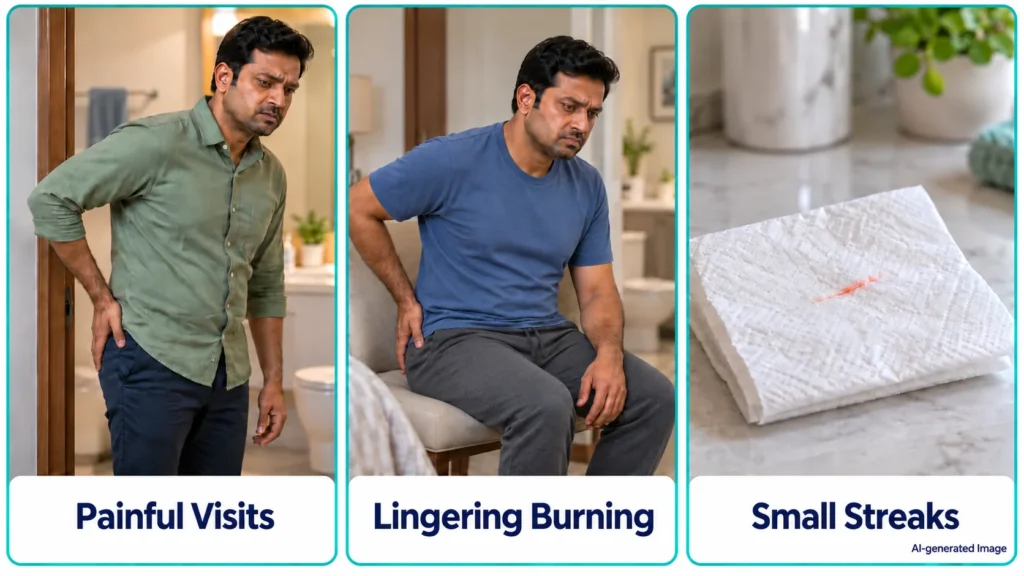
Common anal fissure symptoms are sharp pain during a bowel movement, burning afterwards and a streak of bright-red blood. Pus, fever or an unusual lump need prompt examination.
How Sphincter Spasm Reduces Blood Flow and Delays Healing
An anal sphincter spasm raises pressure and limits blood flow. Treatment must soften stool and relax the muscle, not merely mask pain. According to Johns Hopkins Medicine, this cycle leads to a chronic fissure in approximately 40% of patients (Source).
Acute vs. Chronic Anal Fissure: Why the Difference Matters
An acute anal fissure has usually lasted under six weeks and often responds to conservative care. A chronic anal fissure lasts longer or shows established changes, affecting treatment and fissure healing time.
How Long Should a Fissure Take to Heal?
Pain may improve within days, but healing takes weeks. Once a fissure becomes chronic, natural healing is less predictable. As per a study, it is found that about 35% of chronic fissures eventually healed without intervention, and some of these improvements were only temporary (Source).
If progress is poor after six to eight weeks, I reassess the diagnosis, stool pattern, treatment use and muscle tone.
Signs Your Fissure Has Become Chronic
A sentinel pile, hypertrophied anal papilla, thickened edges, visible muscle fibres or symptoms beyond six to eight weeks suggest chronicity.
Anal Fissure Treatment Without Surgery: What to Try First
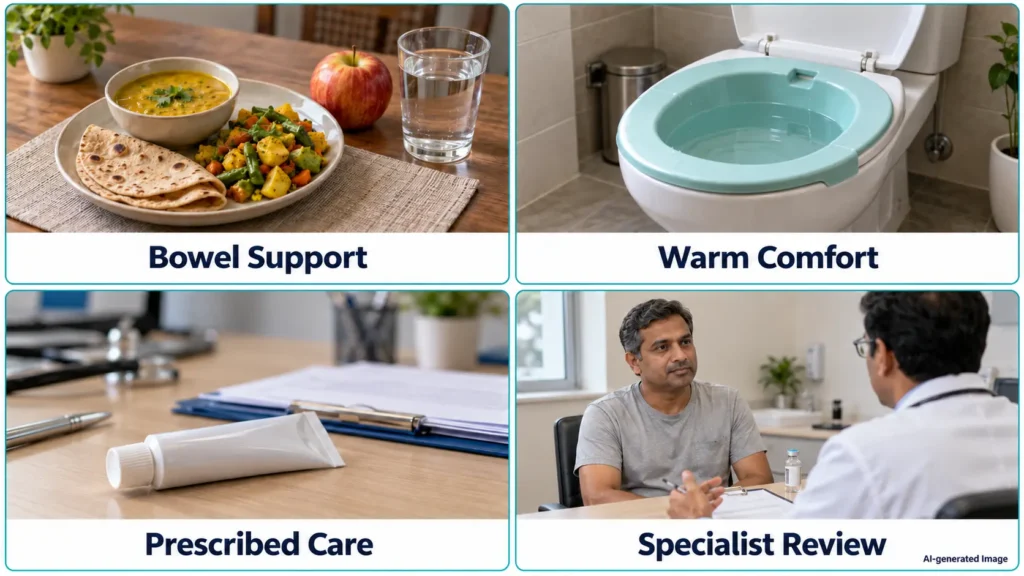
For many seeking anal fissure treatment in Kolkata, a structured medical plan comes first. Anal fissure treatment without surgery prevents repeat injury and relaxes the sphincter.
Diet, Fibre, Water and Sitz Baths
I may advise stool softeners and a high-fibre diet, enough water and regular toilet habits. A warm sitz bath can ease pain and muscle tightness.
Medicated Ointments (Nifedipine, Diltiazem, GTN)
A prescribed fissure ointment, such as nitroglycerin (GTN), diltiazem or nifedipine, relaxes the sphincter. Nifedipine/diltiazem ointment is often better tolerated; GTN commonly causes headache.
Botox Injections as a Middle Step
A Botox injection for fissure relaxes the sphincter without cutting it. Botox for anal fissure may help when ointments fail, but the effect can wear off.
When Does an Anal Fissure Need Surgery? 6 Warning Signs
I discuss anal fissure surgery when one or more of these problems are present:
- No improvement after six to eight weeks of proper treatment.
- The fissure repeatedly returns.
- Pain disrupts sleep, work or bowel movements.
- There is scar tissue, a sentinel pile, hypertrophied papilla or exposed muscle.
- Ointments cause troublesome headache or dizziness.
- Swelling, fever, pus or drainage suggests an abscess or fistula and needs prompt reassessment.
Surgery is not automatic. During anal fissure treatment, I also check for Crohn’s disease, previous injury or surgery, and difficulty controlling gas or stool.
Types of Anal Fissure Surgery
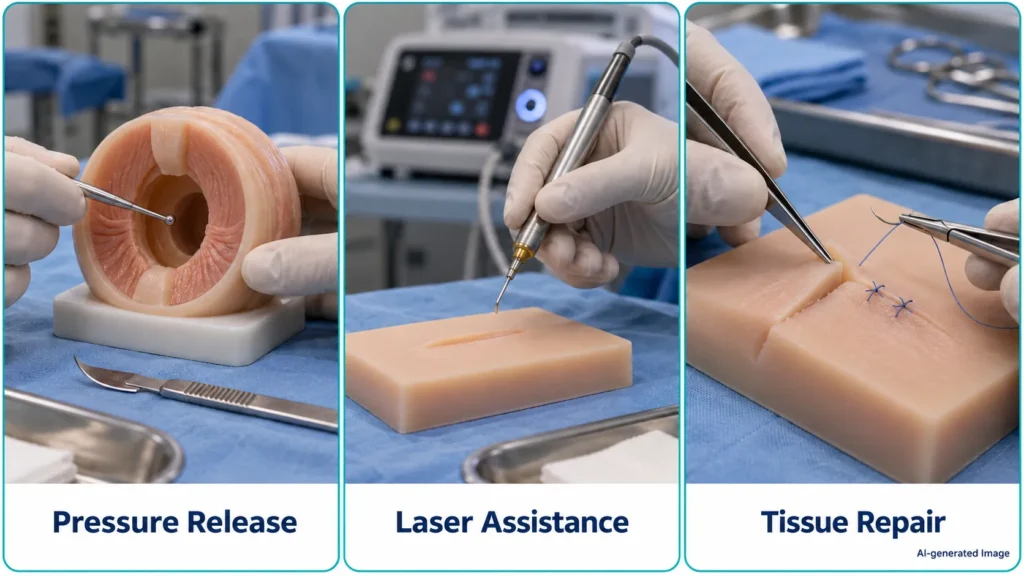
The procedure should match the reason for poor healing and the patient’s continence risk.
Lateral Internal Sphincterotomy
Lateral internal sphincterotomy is the gold-standard operation for selected chronic fissures with a tight sphincter. A controlled part of the muscle is divided to lower pressure.
The American Society of Colon and Rectal Surgeons (ASCRS) reports healing rates of 88%–100% in selected patients (Source). Limiting the cut to the fissure’s length may reduce continence risk.
Laser Surgery for Anal Fissure
Laser surgery for anal fissure may remove scarred tissue or assist another procedure. “Laser” describes a tool, not one standard operation, and is not automatically painless or risk-free. Comparative long-term evidence is limited, so ask what will be done and whether it addresses muscle spasm.
Fissurectomy and Advancement Flap
Fissurectomy removes scarred tissue without dividing the sphincter. An advancement flap covers the defect with healthy tissue. These may suit patients with normal or low pressure, previous injury or a higher risk of incontinence.
Risks and Benefits of Anal Fissure Surgery vs. Medicines
The following treatment figures are based on ASCRS clinical guidance and patient information.
| Point | Medicines or Botox | Lateral internal sphincterotomy |
| Healing | Topical medicines heal roughly half to two-thirds of chronic fissures; Botox often heals 50%–80% | About 88%–100% in selected patients |
| Recurrence | More likely after medicine stops or Botox wears off | Usually low after a correctly performed procedure |
| Recovery | No surgical wound; improvement takes weeks | Usually day surgery; routine activity often resumes within days |
| Risks | Headache or dizziness with GTN; temporary leakage can follow Botox | Bleeding, infection and a small but important risk of temporary or lasting difficulty controlling gas or stool |
Risk after anal fissure surgery varies with technique. Baseline bowel control, childbirth injury and previous anorectal procedures matter.
Recovery After Fissure Surgery: What to Expect
ASCRS patient guidance notes that during recovery after fissure surgery, pain often eases within days, but complete healing may take six to twelve weeks. The fissure surgery recovery time varies by procedure, health and type of work.
First Week Care and Pain Management
Use prescribed pain relief and laxatives, keep stool soft and wash gently with water. Seek advice for persistent bleeding, fever, swelling, pus or difficulty passing urine.
Return to Work and Normal Activity
Many return to desk work after a few days; physical work may need longer. Avoid heavy lifting and strenuous exercise for the first week or as advised.
Preventing Recurrence
Continue fibre, fluids and prescribed stool softener. Avoid straining or delaying a bowel movement. This supports fissure healing time and helps prevent another tear.
How to Decide Between Surgery and Medicines for Anal Fissure Treatment
Before recommending anal fissure surgery, I ask:
- Has examination confirmed the diagnosis?
- Was proper medical treatment followed for long enough?
- Is the fissure chronic, recurrent or disrupting life?
- What are the sphincter pressure and continence risks?
A surgeon experienced in colorectal and perianal conditions should guide the decision. An online checklist cannot assess muscle tone or exclude another cause.
When Surgery May Be the Right Next Step
Persistent pain may mean scar tissue and muscle spasm are keeping the tear open. Are you thinking of an anal fissure treatment in Kolkata? I can help you identify why healing stalled before comparing ointment, Botox and anal fissure surgery. The aim is lasting healing without taking an avoidable risk with bowel control.
Book a consultation for recurring pain, bleeding or a fissure that has not improved.
What People Also Ask
1. How long should medicines be tried before considering anal fissure surgery?
Many courses run for six to eight weeks if symptoms are stable. Seek earlier review for severe pain, signs of infection or treatment-limiting side effects.
2. Is anal fissure surgery painful, and how long does recovery take?
Anaesthesia prevents pain during surgery. Discomfort may last a few days; full healing can take six to twelve weeks.
3. What is the success rate of lateral internal sphincterotomy?
A study reported 88%–100% healing in selected patients. Results depend on technique, previous injury and existing bowel control.
4. Can a chronic anal fissure heal without surgery?
Yes. Some heal with stool regulation, ointment or Botox, though success falls with long-standing symptoms or established scarring.
5. Does anal fissure surgery cause incontinence?
Most patients do not develop lasting incontinence, but difficulty controlling gas or stool is a recognised risk. Careful selection and tailored surgery can reduce it.