
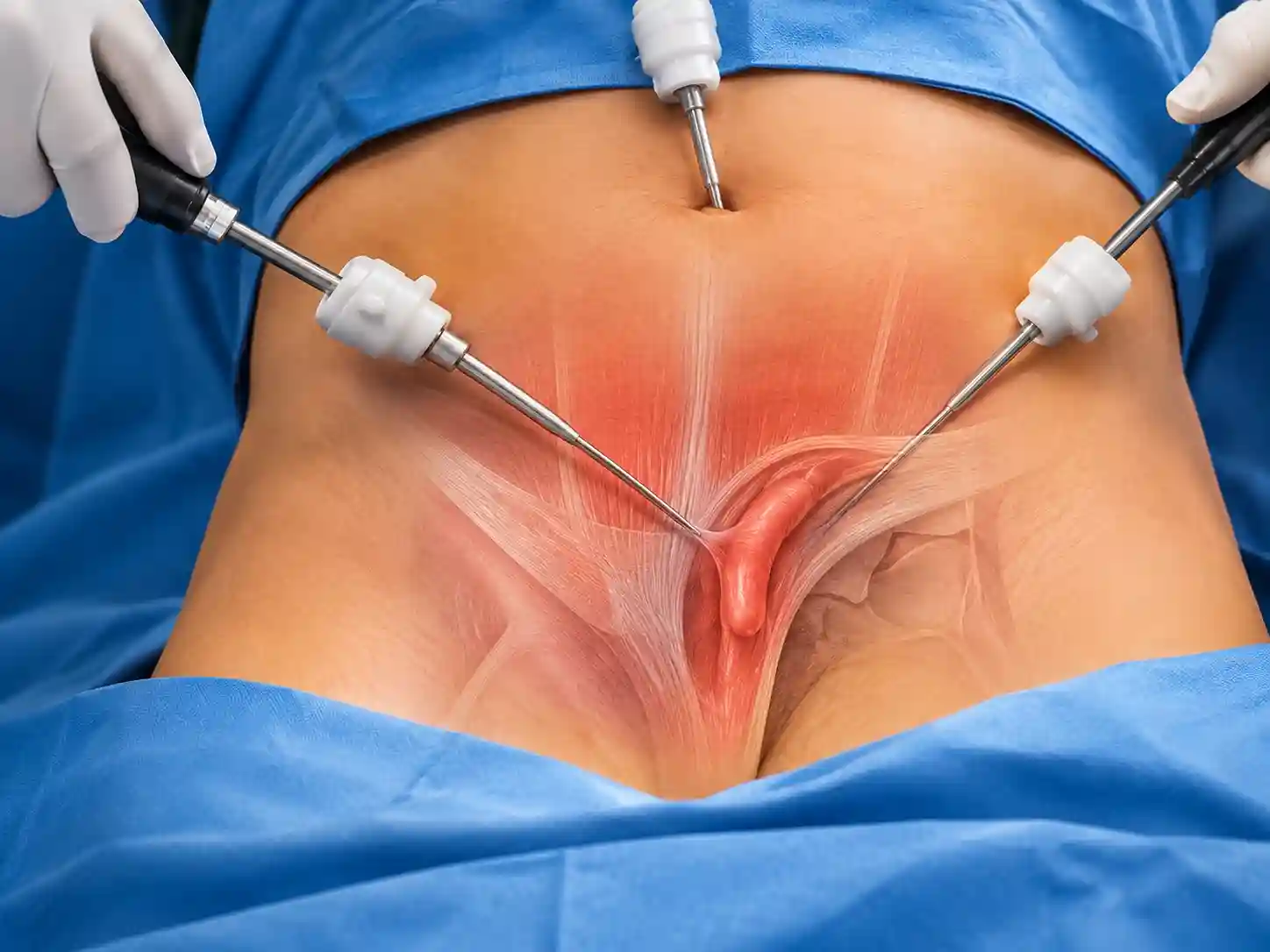
A bulge near the groin, discomfort while walking or pain when lifting heavy objects could indicate an inguinal hernia. Although the symptoms may initially seem manageable, an untreated hernia can gradually enlarge and interfere with everyday activities. In some cases, it may also lead to serious complications.
Laparoscopic inguinal hernia surgery is a minimally invasive procedure that repairs a weakened area of the abdominal wall using small incisions, specialised surgical instruments and mesh.
But does every inguinal hernia require surgery? How long does recovery take? Is laparoscopic repair better than open surgery?
Understanding the surgical procedure, its benefits, potential complications and recovery timeline can help patients make informed treatment decisions.
What Is an Inguinal Hernia?
An inguinal hernia develops when fatty tissue or a portion of the intestine protrudes through a weakened area in the lower abdominal wall near the groin.
It can occur on one side (unilateral hernia) or both sides (bilateral hernia).
Common symptoms of an inguinal hernia include:
- A visible bulge near the groin
- Pain while coughing, bending or lifting heavy objects
- A burning or aching sensation around the bulge
- Heaviness or pressure in the groin
- Swelling around the scrotum in some men
- Discomfort after prolonged standing
The bulge may become more noticeable during physical activity and smaller when lying down. Some patients may also have an inguinal hernia without experiencing significant pain.
Does Every Inguinal Hernia Require Surgery?
Not every inguinal hernia requires immediate surgery. Doctors may recommend watchful waiting for certain men with minimal or no symptoms.
However, an inguinal hernia generally cannot heal independently. Surgical intervention may become necessary when the bulge increases in size, pain becomes persistent or routine activities become difficult.
If the protruding tissue becomes trapped, it is known as an incarcerated hernia. When the blood supply to this tissue is interrupted, it becomes a strangulated hernia, which requires emergency medical attention.
Women with groin hernias generally require timely surgical assessment because of the possibility of an underlying femoral hernia.
How Is Laparoscopic Inguinal Hernia Surgery Performed?
Laparoscopic hernia repair involves accessing the weakened abdominal wall through small incisions rather than making a larger incision directly over the groin.
Step 1: Administration of General Anaesthesia
General anaesthesia is administered to keep the patient unconscious and comfortable throughout the surgical procedure.
Step 2: Creating Small Incisions
The surgeon typically makes three small incisions around the abdomen. Carbon dioxide gas is introduced to create sufficient working space and improve visibility.
Step 3: Inserting the Laparoscope
A thin surgical instrument equipped with a camera and light source is inserted through one incision. It provides magnified images of the surgical area on a monitor.
Step 4: Repairing the Hernia with Mesh
The protruding tissue is returned to its appropriate position. Surgical mesh is generally placed to reinforce the weakened abdominal wall and reduce the likelihood of recurrence.
Step 5: Closing the Incisions
After completing the repair, the surgeon removes the surgical instruments and closes the small incisions using sutures or surgical adhesive.
What Are the Different Types of Laparoscopic Inguinal Hernia Repair?
Two commonly performed laparoscopic techniques are TAPP and TEP.
Transabdominal Preperitoneal Repair (TAPP)
During TAPP repair, the surgeon enters the abdominal cavity to access the hernia. Surgical mesh is placed in the preperitoneal space to reinforce the weakened abdominal wall.
Totally Extraperitoneal Repair (TEP)
During TEP repair, the surgeon accesses the hernia without intentionally entering the abdominal cavity. The mesh is positioned within the preperitoneal space.
Both techniques aim to achieve a durable hernia repair. The choice depends on the patient's medical history, hernia characteristics, previous abdominal operations and surgical expertise.
Laparoscopic vs Open Inguinal Hernia Surgery: What Is the Difference?
Both laparoscopic and open hernia repairs are established surgical procedures. However, they differ in their surgical approach, postoperative discomfort and recovery experience.
| Parameters | Laparoscopic Hernia Surgery | Open Hernia Surgery |
| Surgical incisions | Typically three small incisions | One larger groin incision |
| Anaesthesia | General anaesthesia | Local, regional or general anaesthesia |
| Postoperative pain | Generally less | May be comparatively higher |
| Surgical scars | Smaller scars | Comparatively larger scar |
| Hospital stay | Often same-day discharge | Same-day discharge or overnight stay |
| Recovery | Often faster | May take longer |
| Bilateral hernia repair | Possible through the same incisions | Usually requires separate groin incisions |
| Chronic groin pain | Generally lower risk | Comparatively higher risk |
| Recurrence risk | Comparable with appropriate technique | Comparable with appropriate technique |
The appropriate surgical approach depends on the patient's overall health, hernia complexity and individual treatment requirements.
What Are the Benefits of Laparoscopic Inguinal Hernia Surgery?
Laparoscopic hernia repair offers several potential advantages for suitable patients, including:
- Smaller surgical incisions and less visible scarring
- Reduced postoperative pain and discomfort
- Faster return to everyday activities
- Lower risk of chronic postoperative groin pain
- Simultaneous repair of hernias on both sides
- Suitability for certain recurrent hernias following previous open surgery
However, individual surgical outcomes and recovery experiences may vary.
How Long Does Recovery Take After Laparoscopic Inguinal Hernia Surgery?

Many patients can return home on the same day following an uncomplicated laparoscopic hernia repair. While light activities may resume within one to two weeks, complete recovery may take approximately four to six weeks.
During the First 24–48 Hours
Patients may experience mild abdominal discomfort, bloating, swelling and tiredness. Short walks are generally encouraged to support circulation and mobility.
During the First Week
Postoperative discomfort gradually improves. Patients can usually perform gentle household activities while avoiding excessive physical strain.
After One to Two Weeks
Many patients can return to desk-based work and routine daily activities, depending on their recovery progress.
After Four to Six Weeks
Patients may gradually resume more physically demanding activities, depending on their surgeon's advice and individual recovery.
What Precautions Should You Take After Inguinal Hernia Surgery?
Following appropriate postoperative instructions can support recovery and reduce the risk of complications.
Patients should maintain adequate hydration, consume fibre-rich foods, avoid constipation, take prescribed medicines and keep surgical incisions clean.
Heavy lifting and strenuous exercise should be resumed according to the surgeon's recommendations. Attending scheduled follow-up appointments is also important for monitoring recovery.
Who May Not Be Suitable for Laparoscopic Inguinal Hernia Surgery?
Although laparoscopic repair offers several advantages, additional medical assessment may be required for patients with:
- Severe cardiovascular or respiratory conditions
- Difficulty tolerating general anaesthesia
- Uncontrolled bleeding disorders
- Previous extensive abdominal or pelvic surgery
- Pregnancy
- Severe obesity
- Complicated or acutely irreducible hernias
Patients taking blood-thinning medicines also require careful preoperative assessment.
These factors do not automatically exclude patients from laparoscopic surgery. The surgeon determines the appropriate treatment approach after evaluating individual risks.
What Are the Possible Risks of Laparoscopic Hernia Surgery?
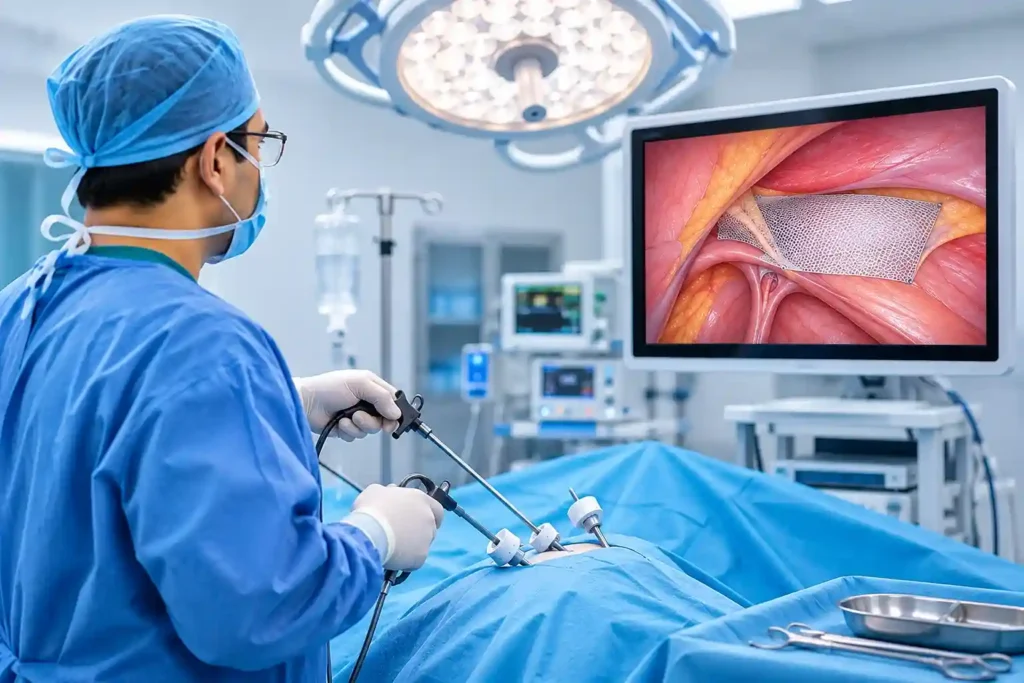
Like any surgical procedure, laparoscopic inguinal hernia repair carries certain potential risks and complications.
These may include:
- Surgical site or mesh infection
- Bleeding and fluid accumulation
- Temporary difficulty passing urine
- Persistent groin pain
- Injury to surrounding organs or nerves
- Spermatic cord injury
- Hernia recurrence
- Anaesthesia-related complications
Patients should seek prompt medical attention if they experience persistent fever, severe abdominal pain, increasing wound redness, vomiting or difficulty passing urine after surgery.
When Should You Consult a Hernia Surgeon?
Persistent groin pain, increasing swelling and difficulty performing everyday activities should not be ignored. Sudden severe pain, vomiting or a discoloured bulge that cannot be pushed back may indicate a medical emergency requiring immediate attention.
If you are considering Laparoscopic Hernia Surgery in Kolkata, consult Dr Mainak Pal for a detailed clinical assessment, personalised treatment recommendations and postoperative recovery guidance.
Frequently Asked Questions (FAQs)
1. How long does laparoscopic inguinal hernia surgery take?
The procedure generally takes 30–90 minutes, depending on the size, location and complexity of the hernia.
2. Is laparoscopic inguinal hernia surgery painful?
Patients remain unconscious under general anaesthesia during surgery. Mild to moderate postoperative discomfort is common and can usually be managed with prescribed pain medication.
3. Can an inguinal hernia return after laparoscopic surgery?
Yes. Although surgical mesh helps reduce the risk of recurrence, factors such as tissue quality, surgical technique and underlying health conditions may influence long-term outcomes.
4. When can I start walking after laparoscopic hernia surgery?
Most patients can begin gentle walking on the same day or the following day. Early mobilisation supports circulation and recovery.
5. What is the cost of laparoscopic inguinal hernia surgery?
The cost depends on the hernia's complexity, surgical technique, mesh type, hospital facilities, anaesthesia and hospitalisation requirements. A clinical assessment can help determine the estimated treatment cost.